the task
designing a resilient sanctuary for a heating world that feels less like a machine and more like a second skin.

adaptive living space
designing a resilient sanctuary for a heating world that feels less like a machine and more like a second skin.
making the oppressive equatorial sun an ally rather than an enemy through the delicate physics of airflow.
a house that breathes through a leaf-inspired canopy, turning the heavy tropical air into a cooling, constant breeze.
designing a resilient sanctuary for a heating world that feels less like a machine and more like a second skin.
making the oppressive equatorial sun an ally rather than an enemy through the delicate physics of airflow.
a house that breathes through a leaf-inspired canopy, turning the heavy tropical air into a cooling, constant breeze.
biomimetic shelter


this house is not a static object, but an adaptive membrane that combines technological precision with the haptic honesty of natural principles—a sanctuary that not only makes life in heat zones possible but aesthetically elevates it.
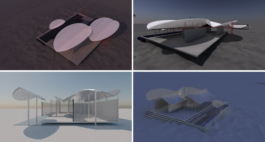
the appearance // from the outside, the structure suggests a quiet rebellion against the heavy geometry of the tropics. it is a silhouette of levitation, where a series of elongated, leaf-like blades hover with a delicate, almost accidental grace above the living quarters. these forms—concave and opposite—do not merely shelter; they perform. they are architectural lungs, catching the torrential rain in their hollows or parrying the sun’s glare with a dancer’s poise.
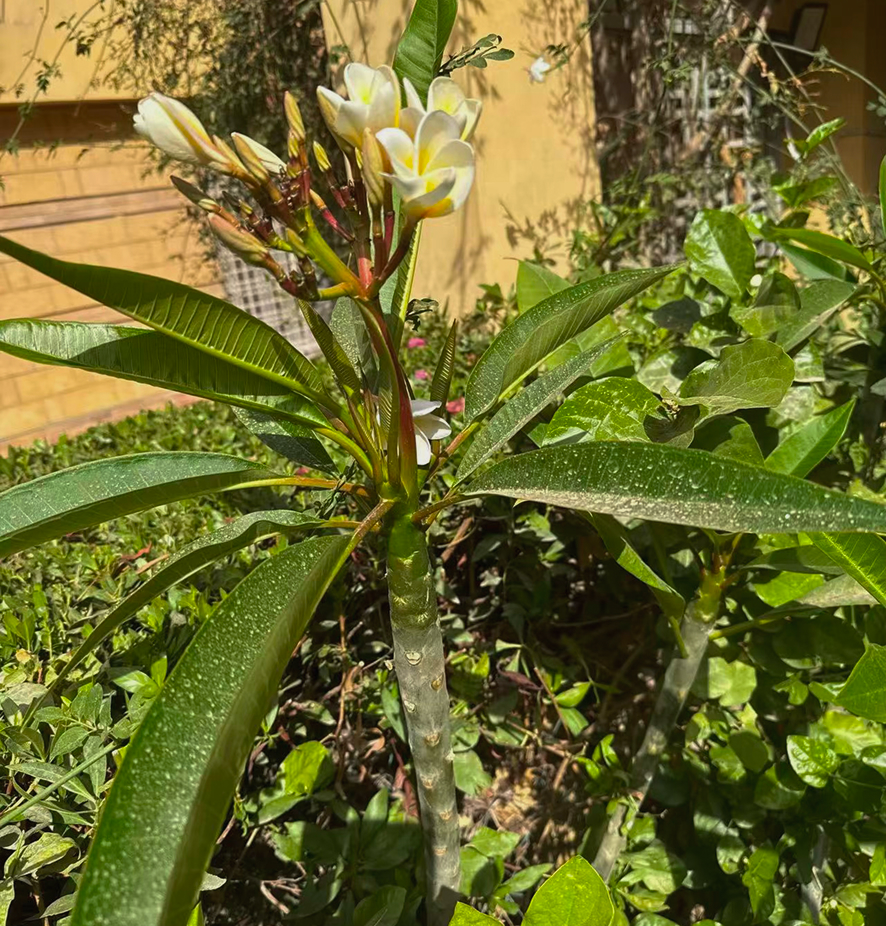
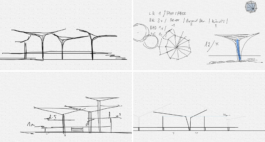
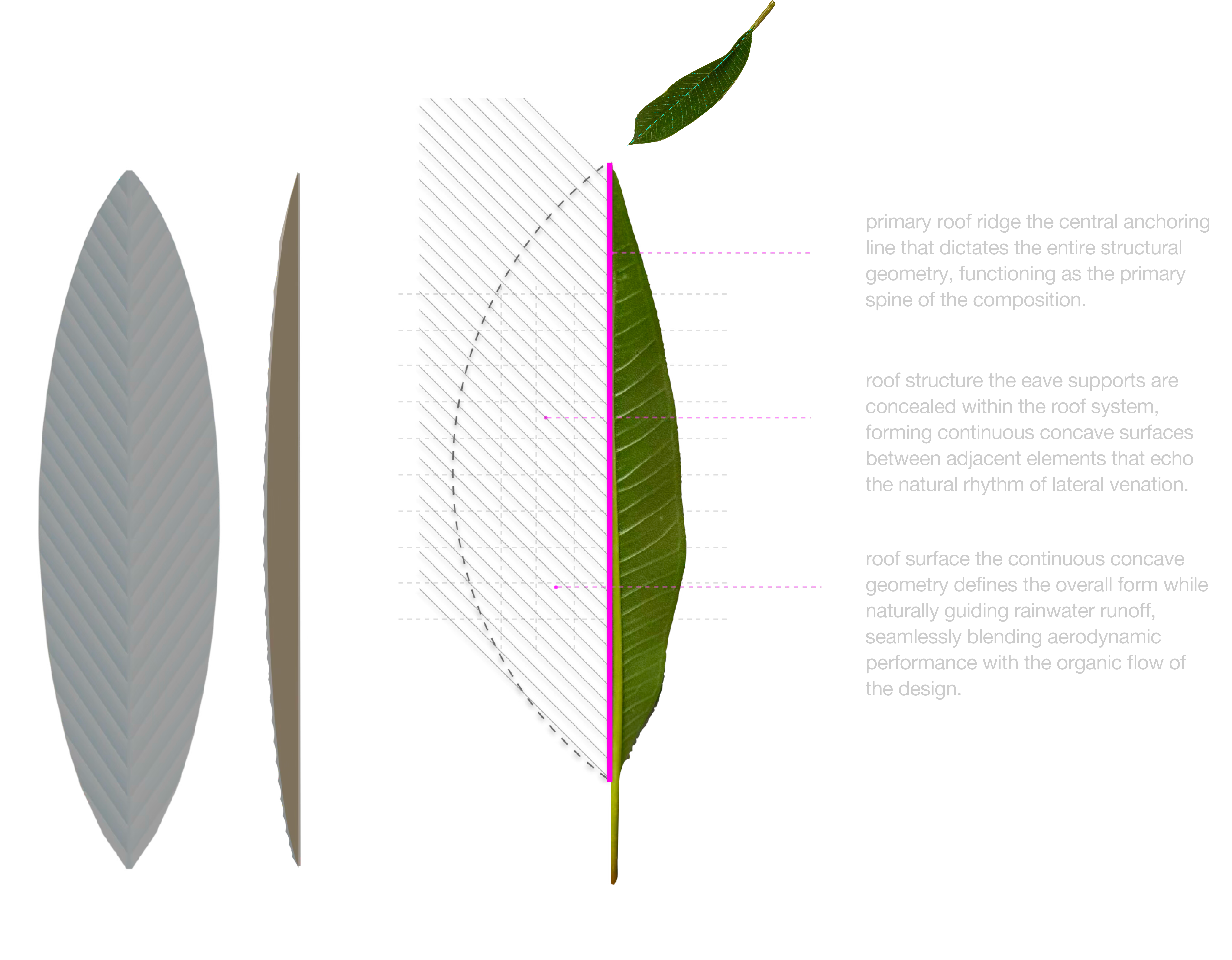
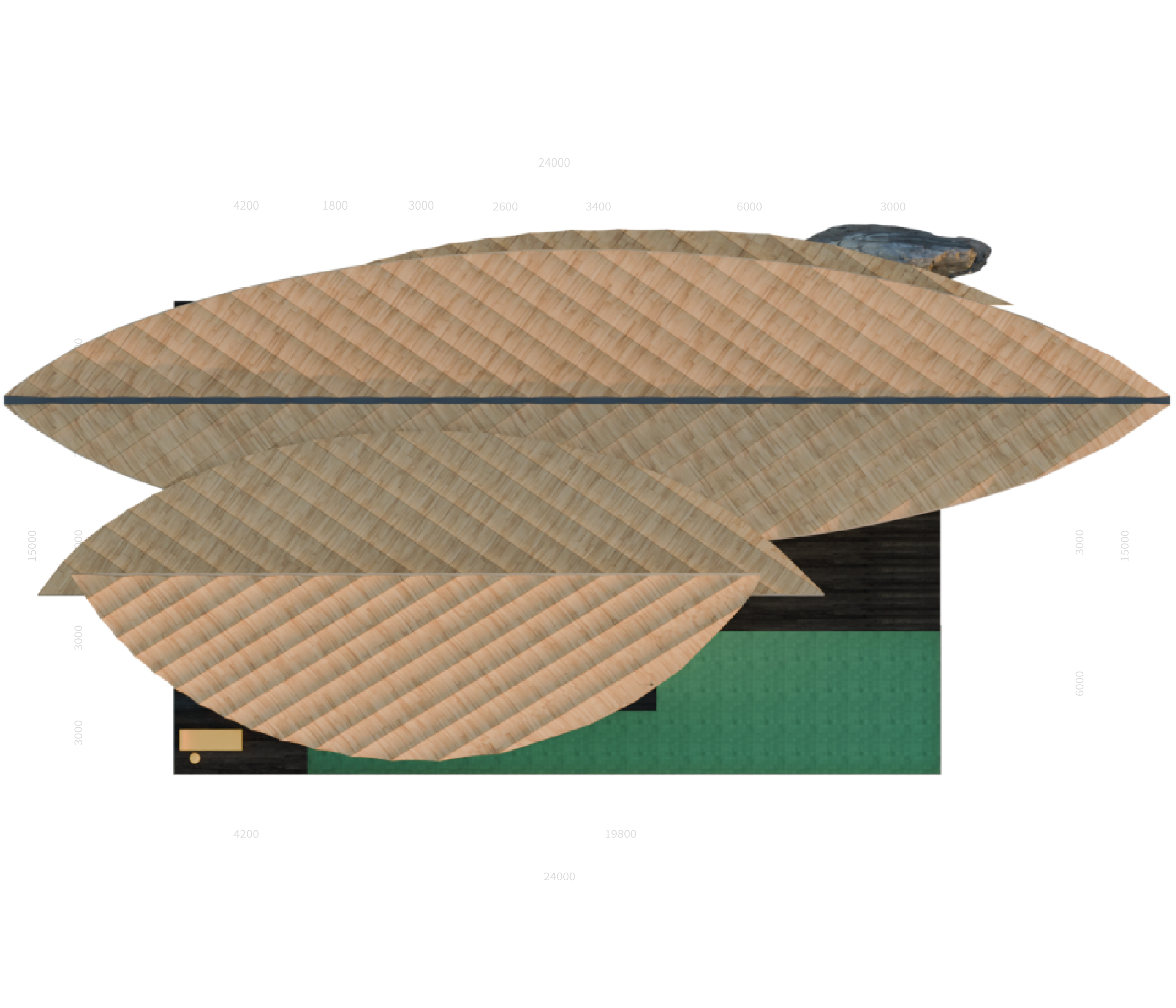
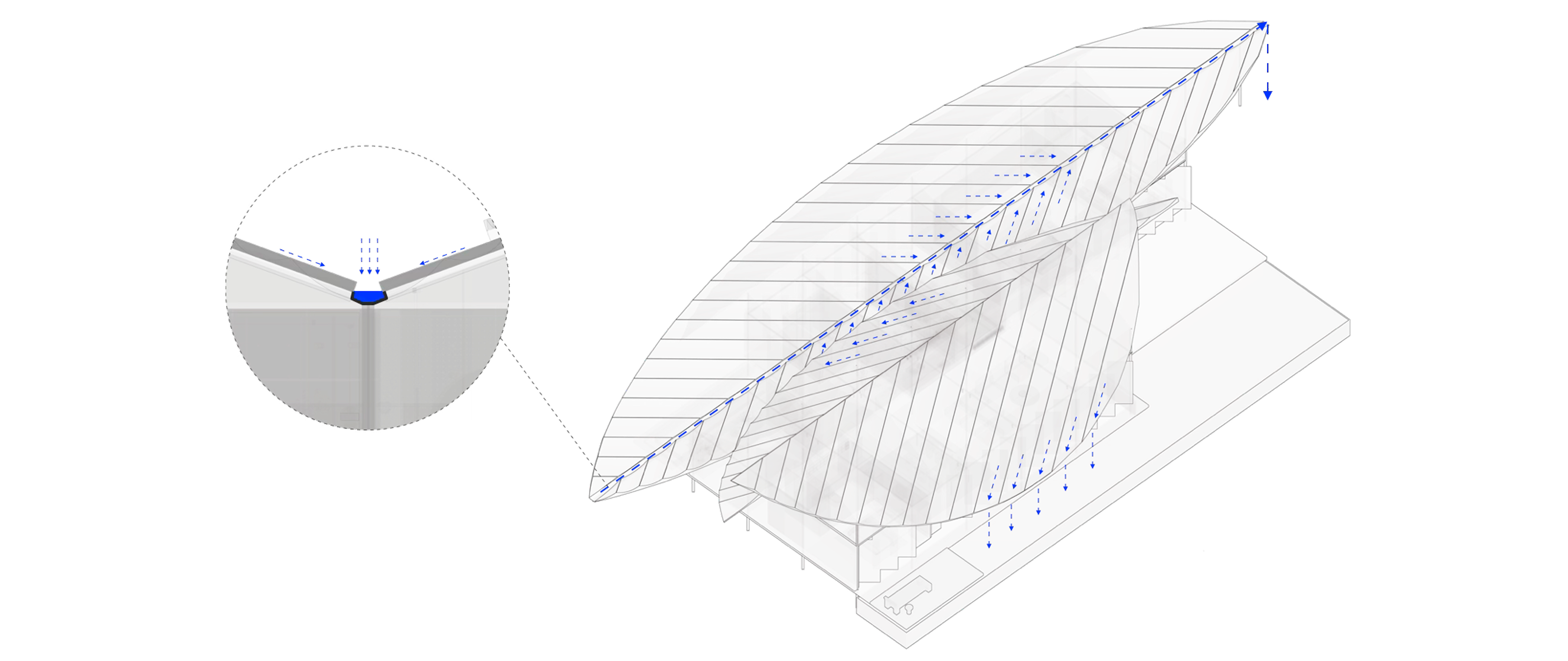
inspired by the primary and secondary vein logic of the leaf, the roof structure is translated into a central spine with branching supports, forming a lightweight and efficient load-bearing system.
central drainage line the pronounced midrib acts as a natural drainage spine, guiding rainwater efficiently from the tip toward the stem and preventing water accumulation across the surface.
directed venation channels the angled lateral veins subtly channel moisture toward the central spine, distributing and directing water flow while maintaining the structural stability of the leaf.
aerodynamic curvature the gentle curvature of the leaf creates a sloped, aerodynamic surface that encourages water to shed quickly, reducing weight and protecting the leaf from environmental stress.
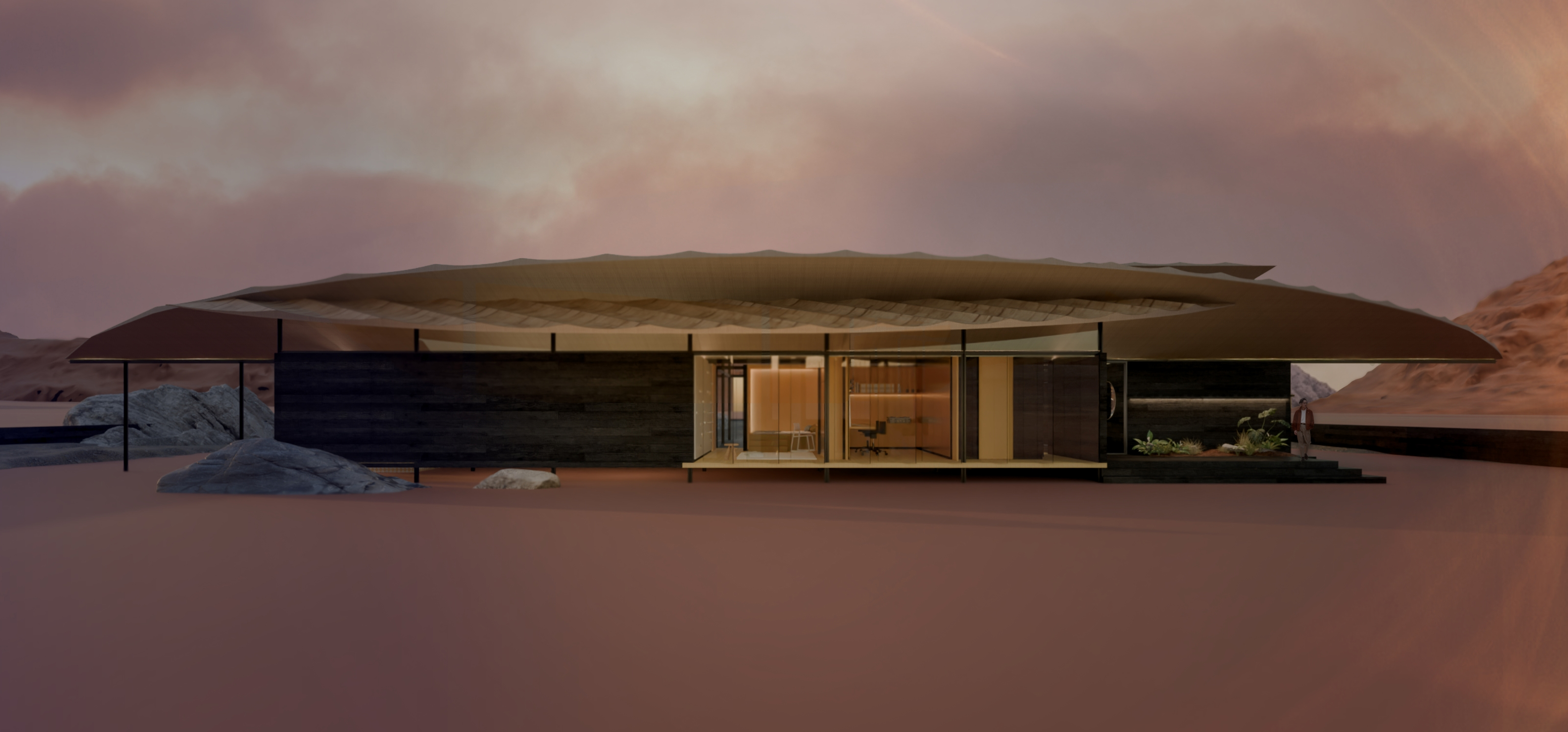
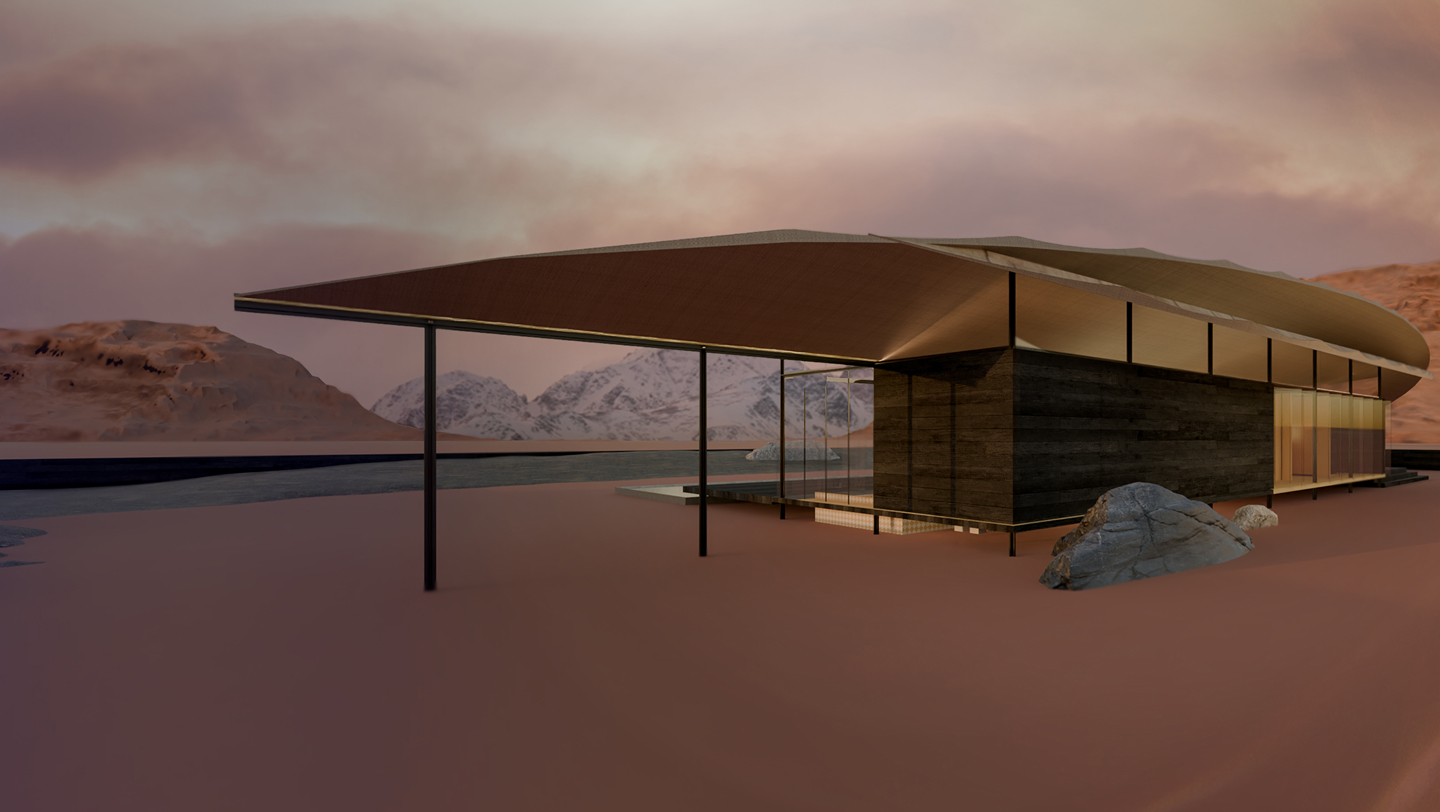
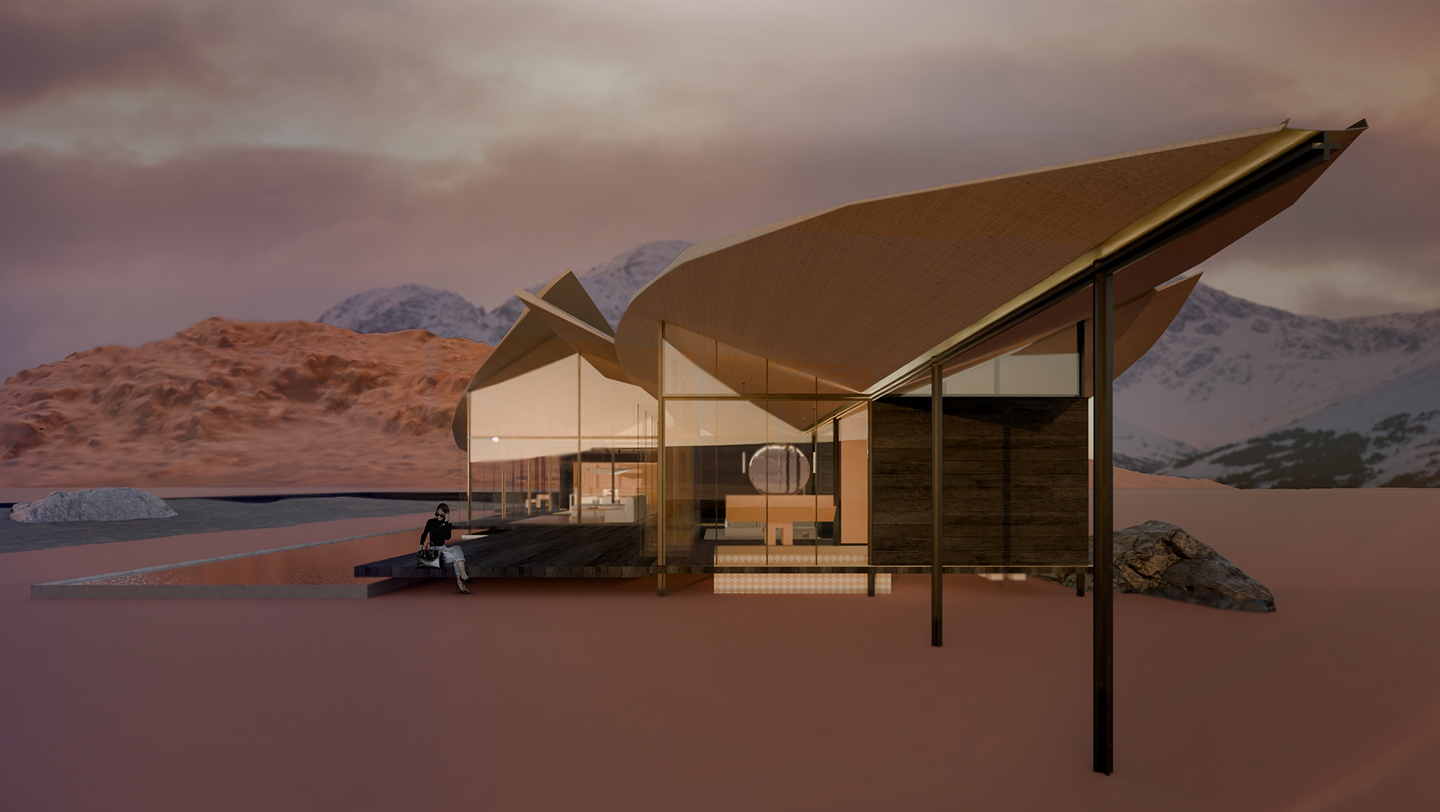
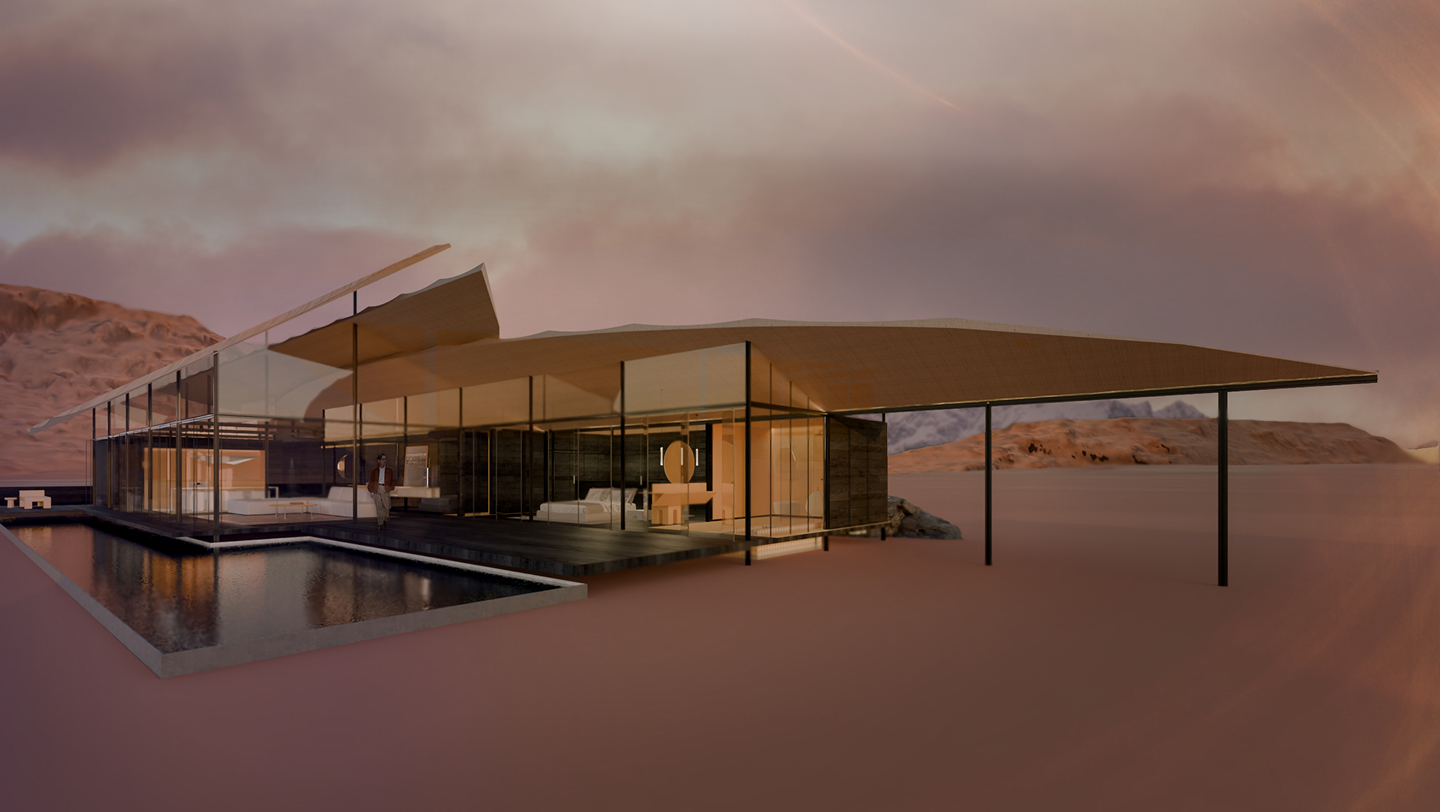
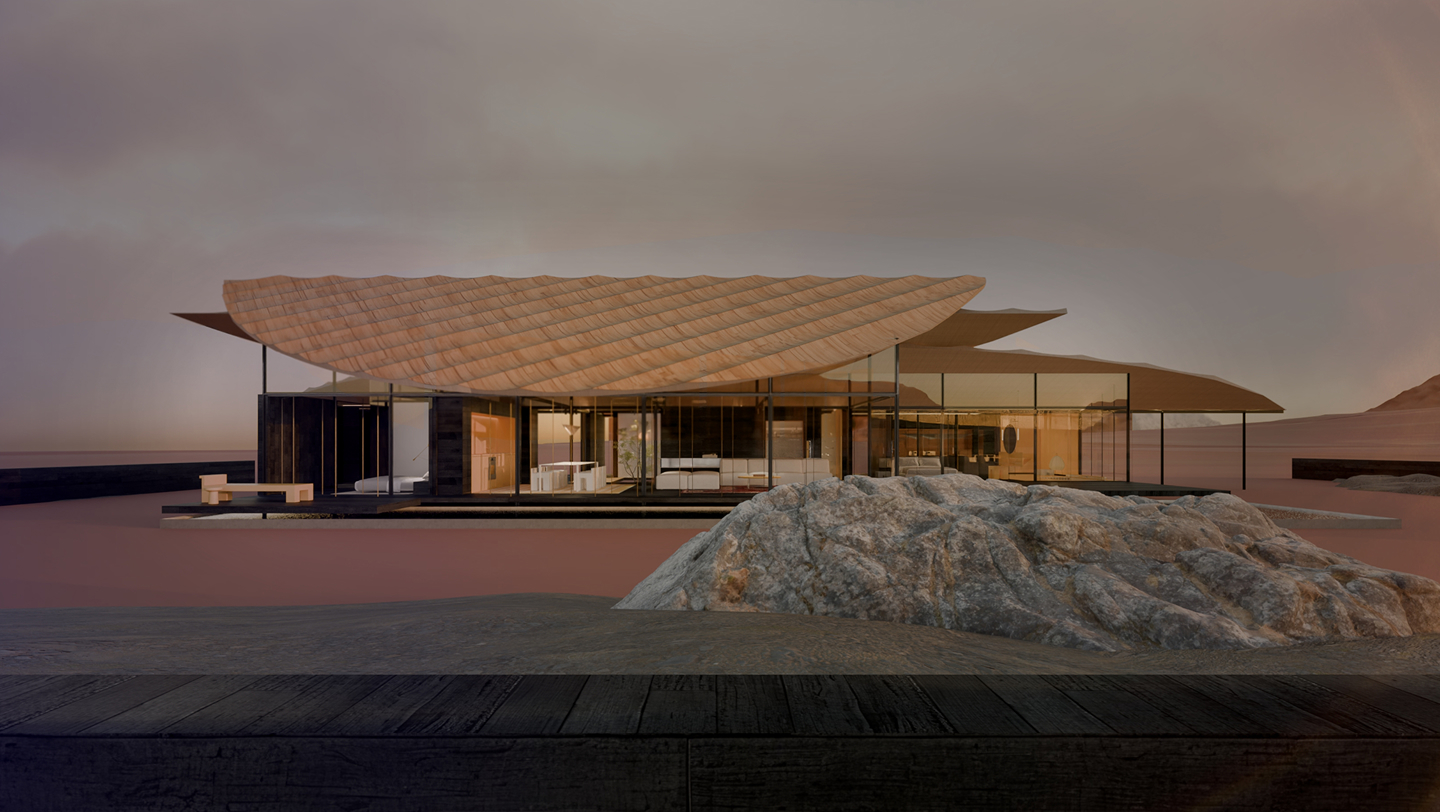
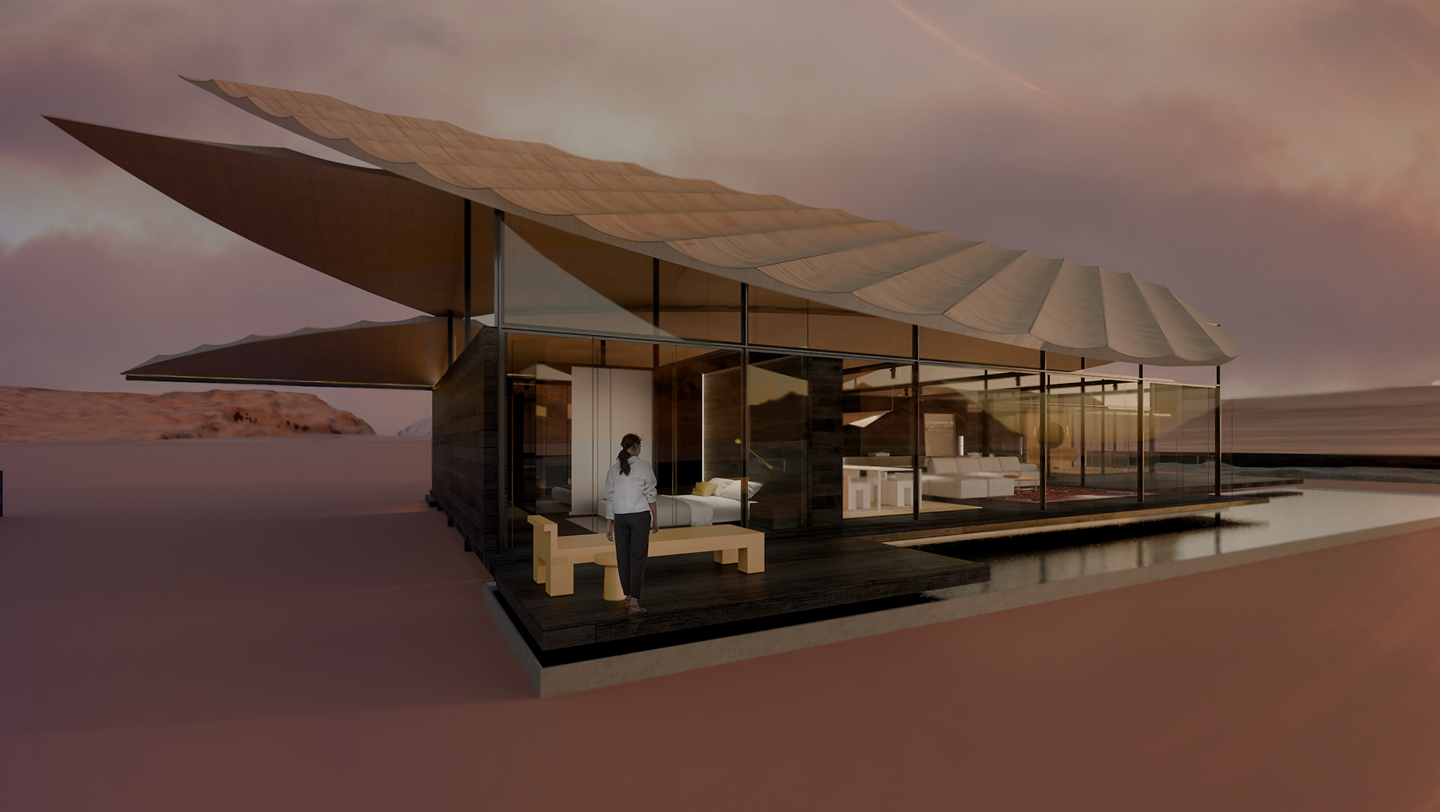
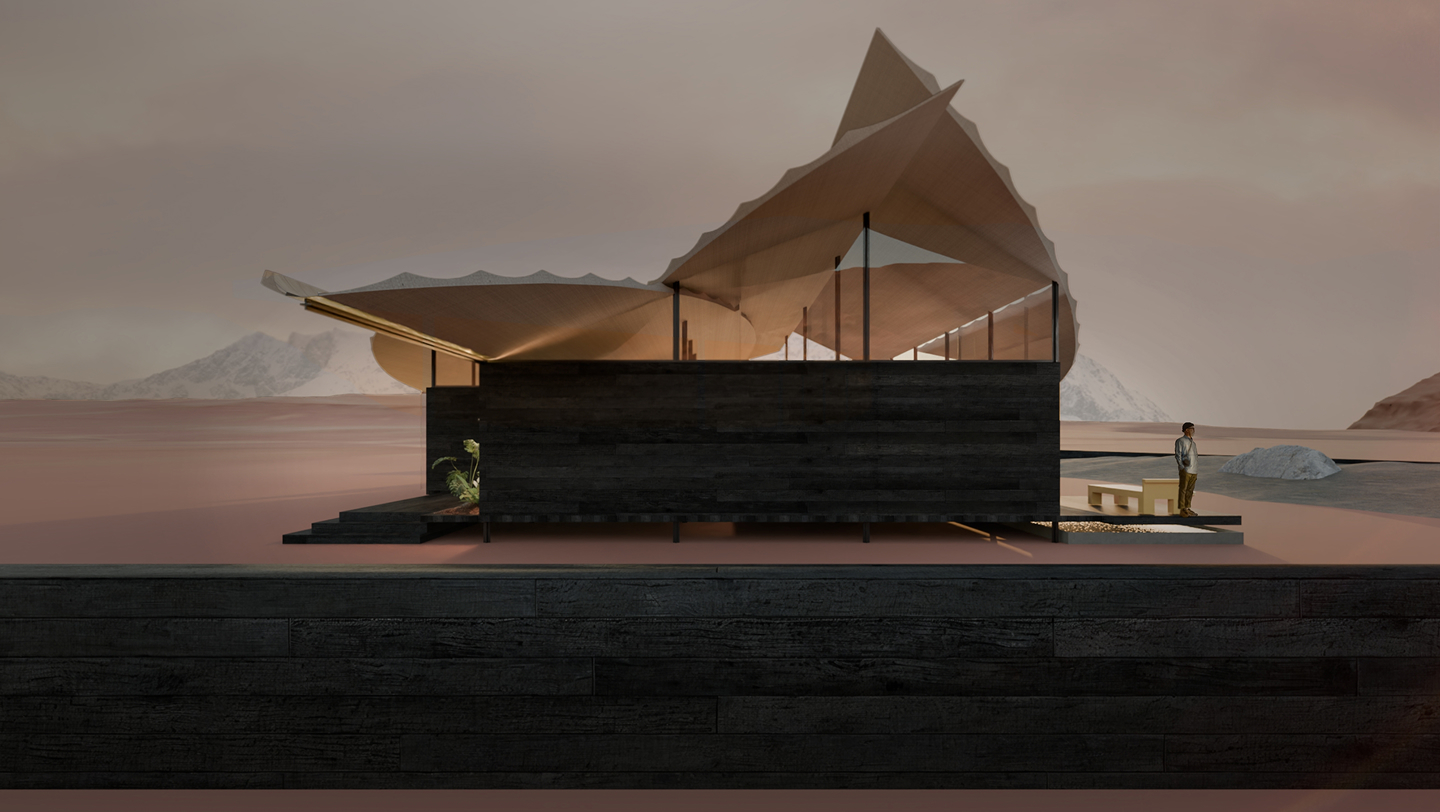
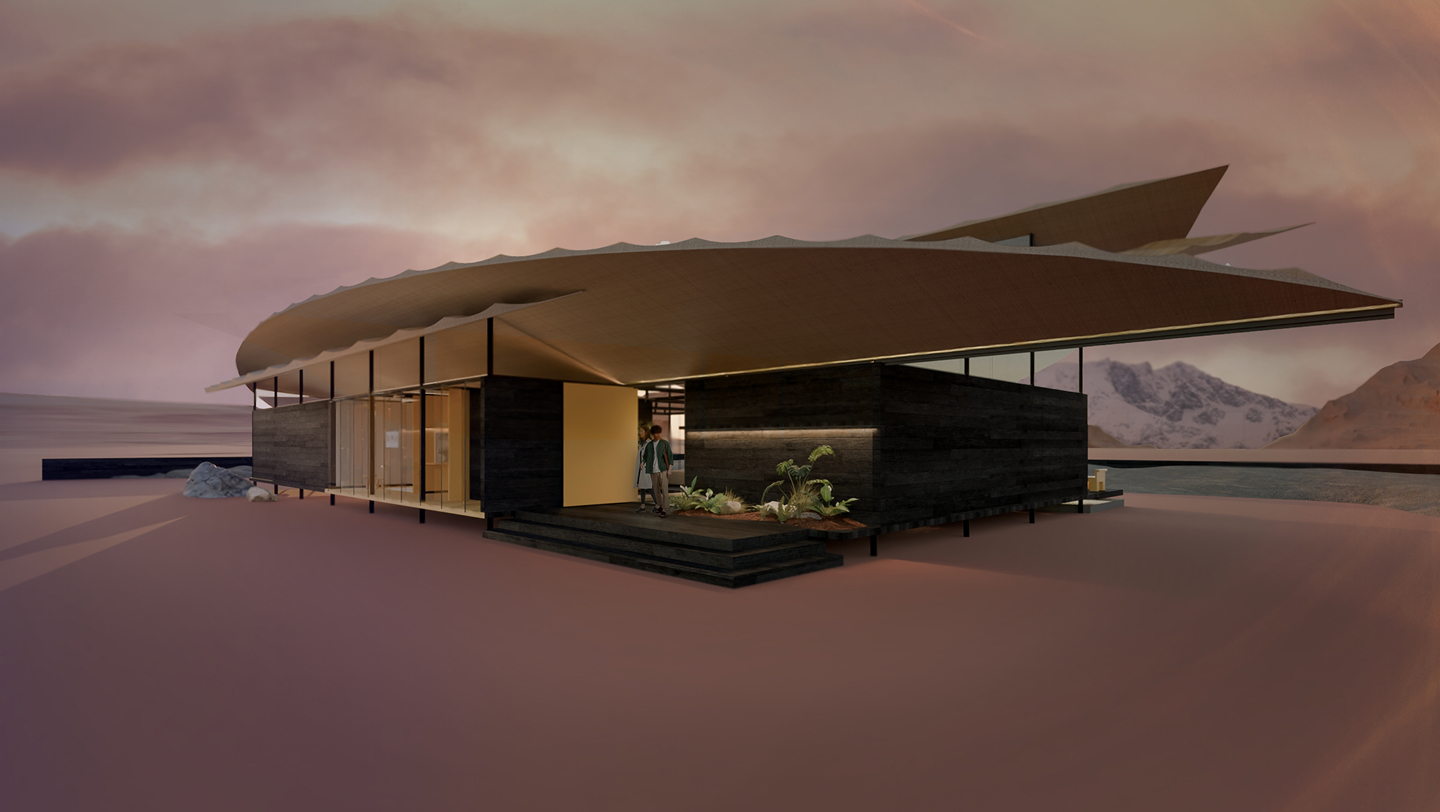
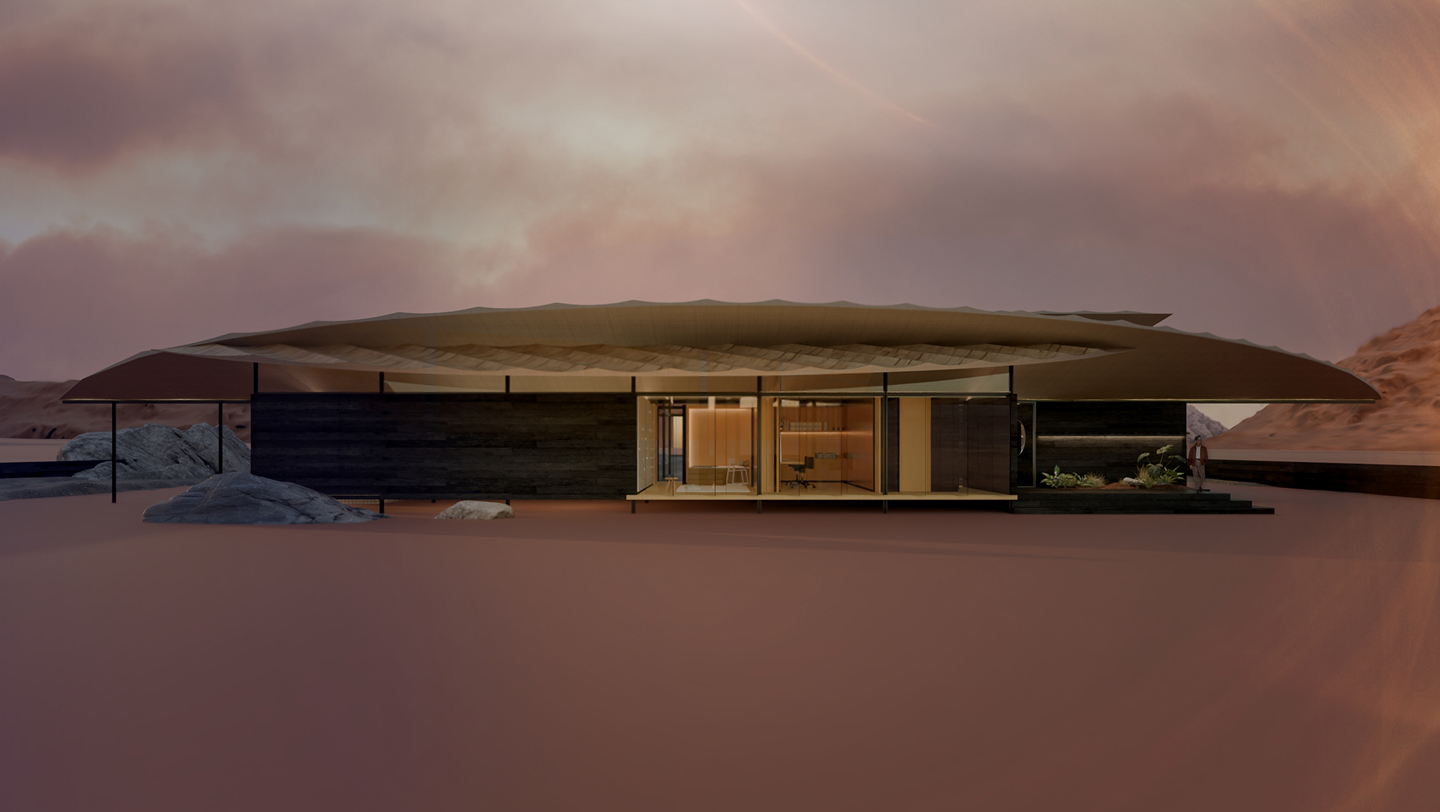
the feeling // there is a profound lightness in the way these elements rest. they are not bolted or bound in the traditional sense, but appear to be gently placed upon the primary supports, like fallen foliage caught in a momentary breeze. it feels less like a building and more like a temporary alignment of light and shadow, a sanctuary that refuses to impose itself on the landscape, choosing instead to float within it.
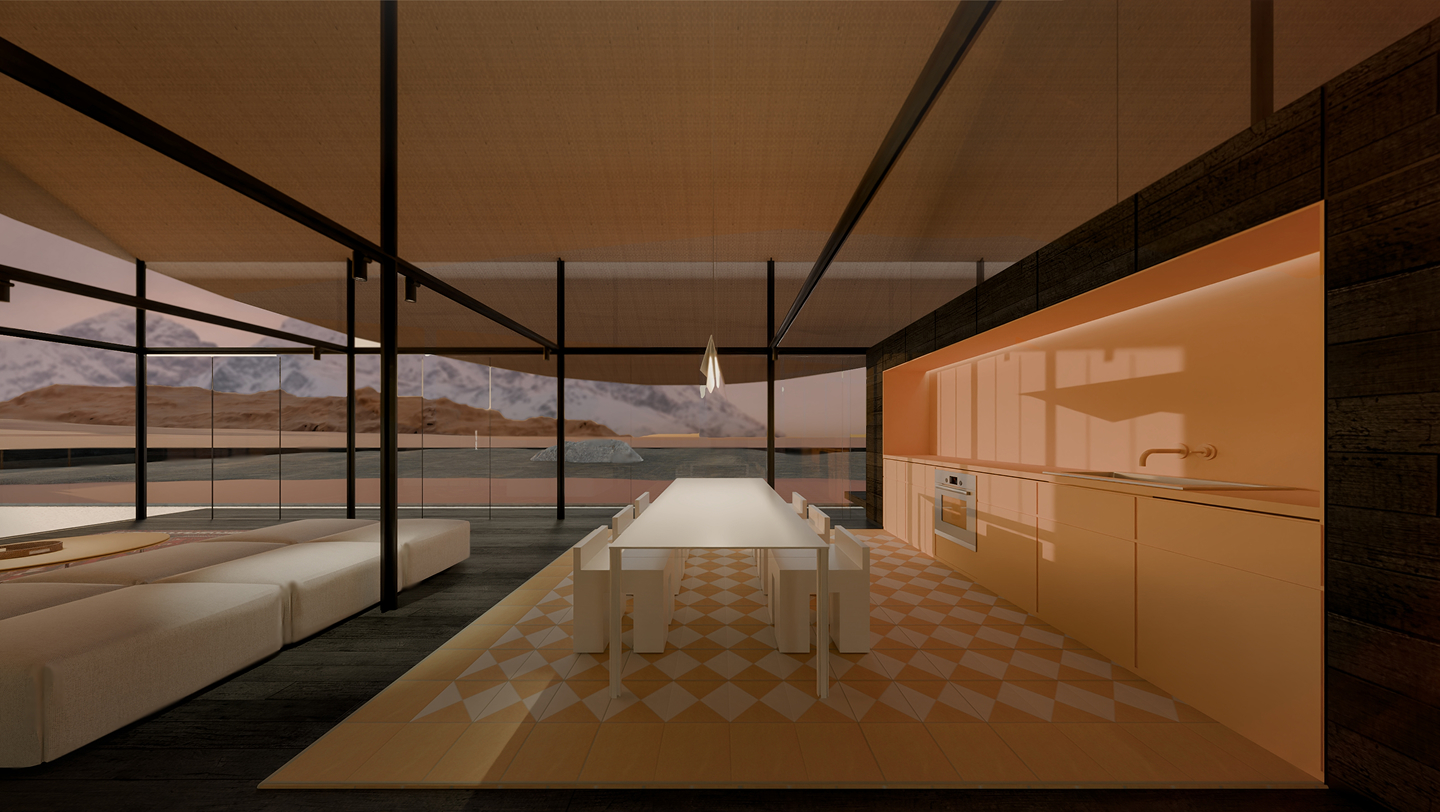
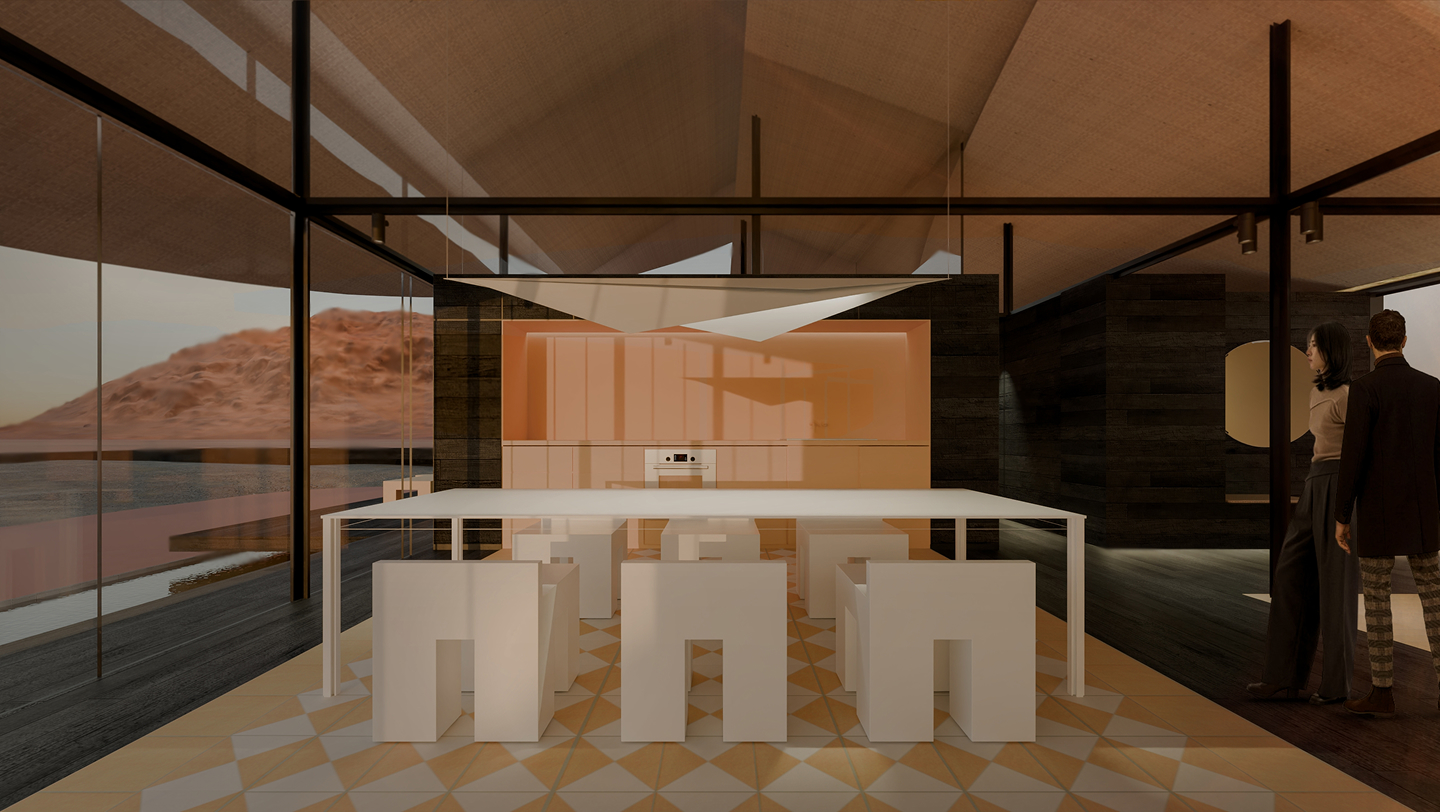
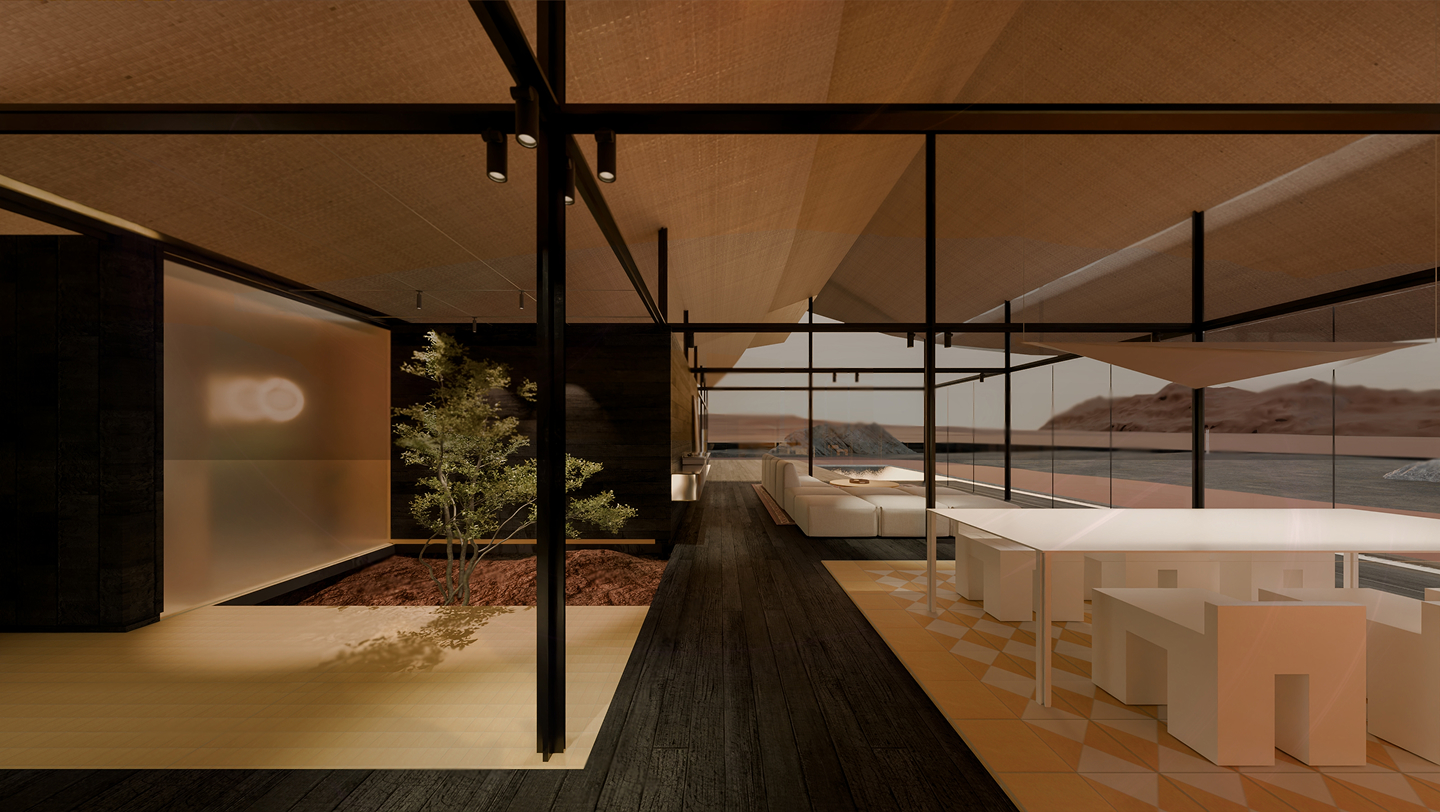
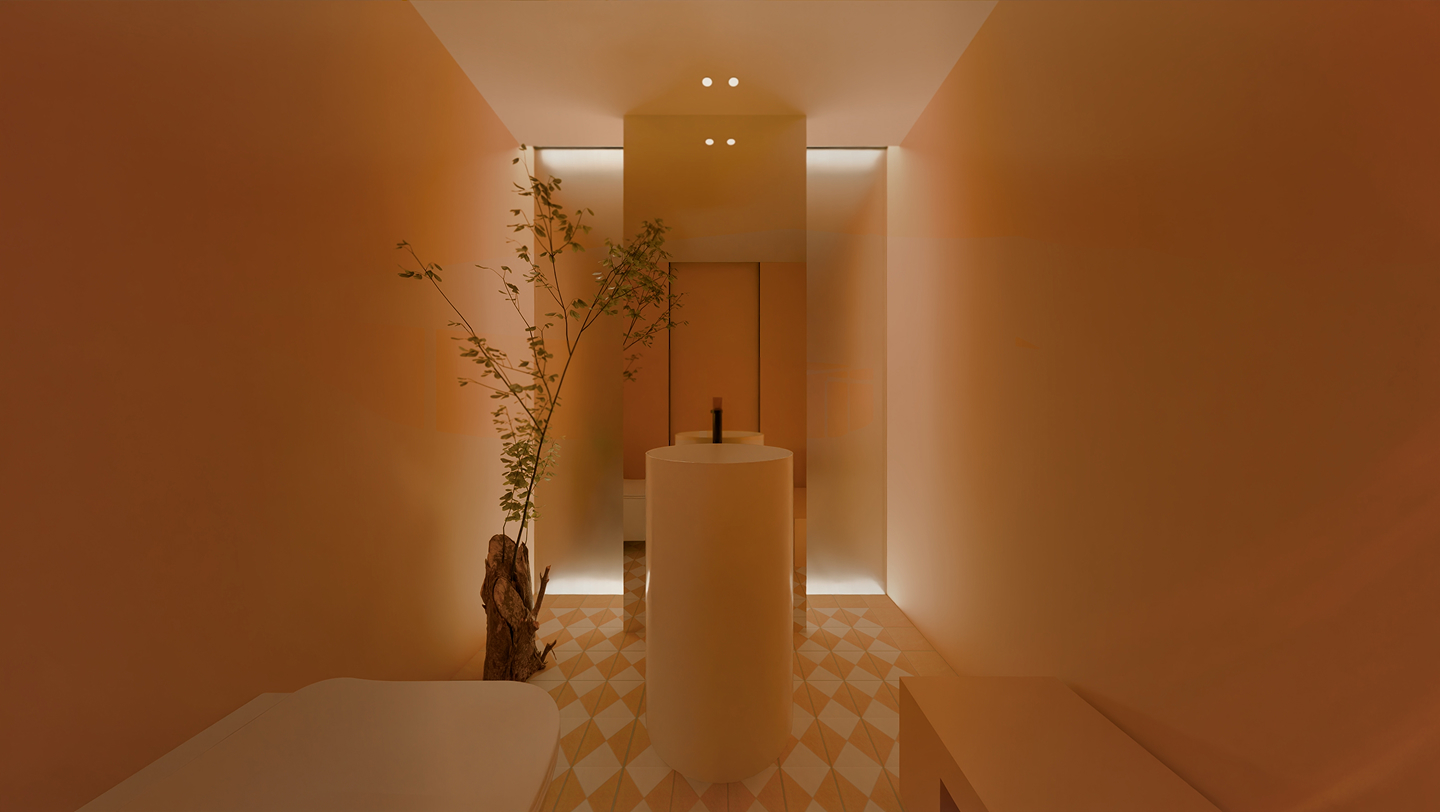
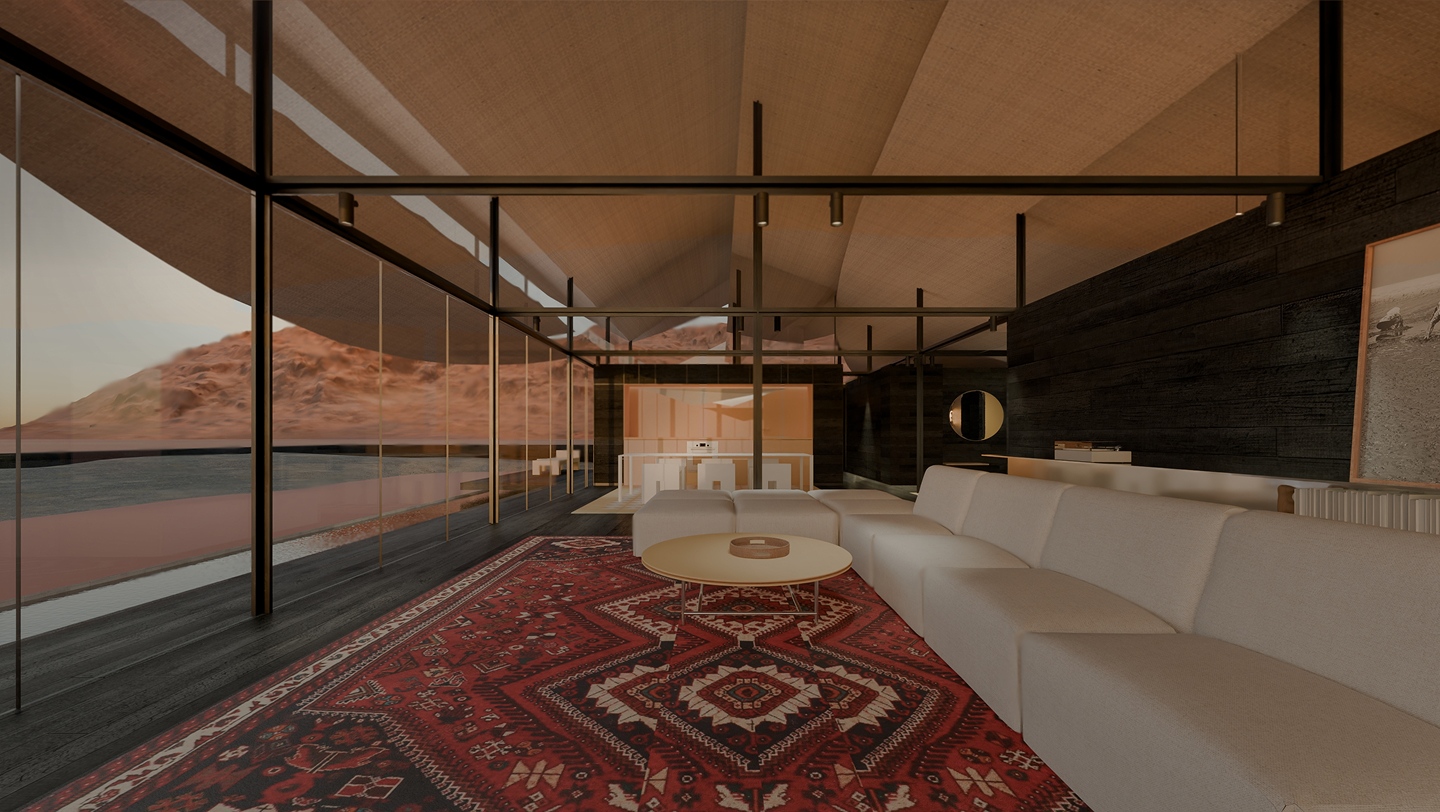
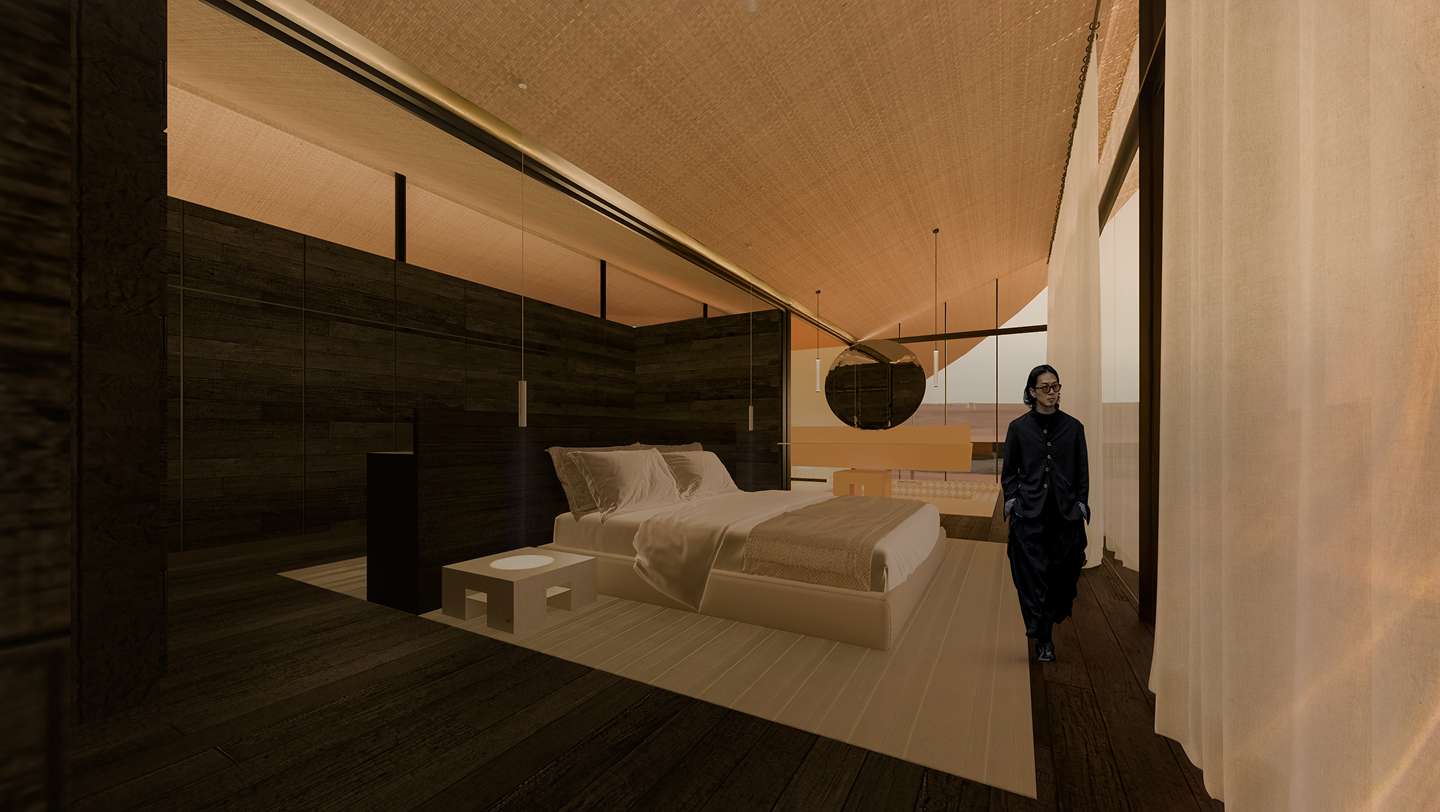
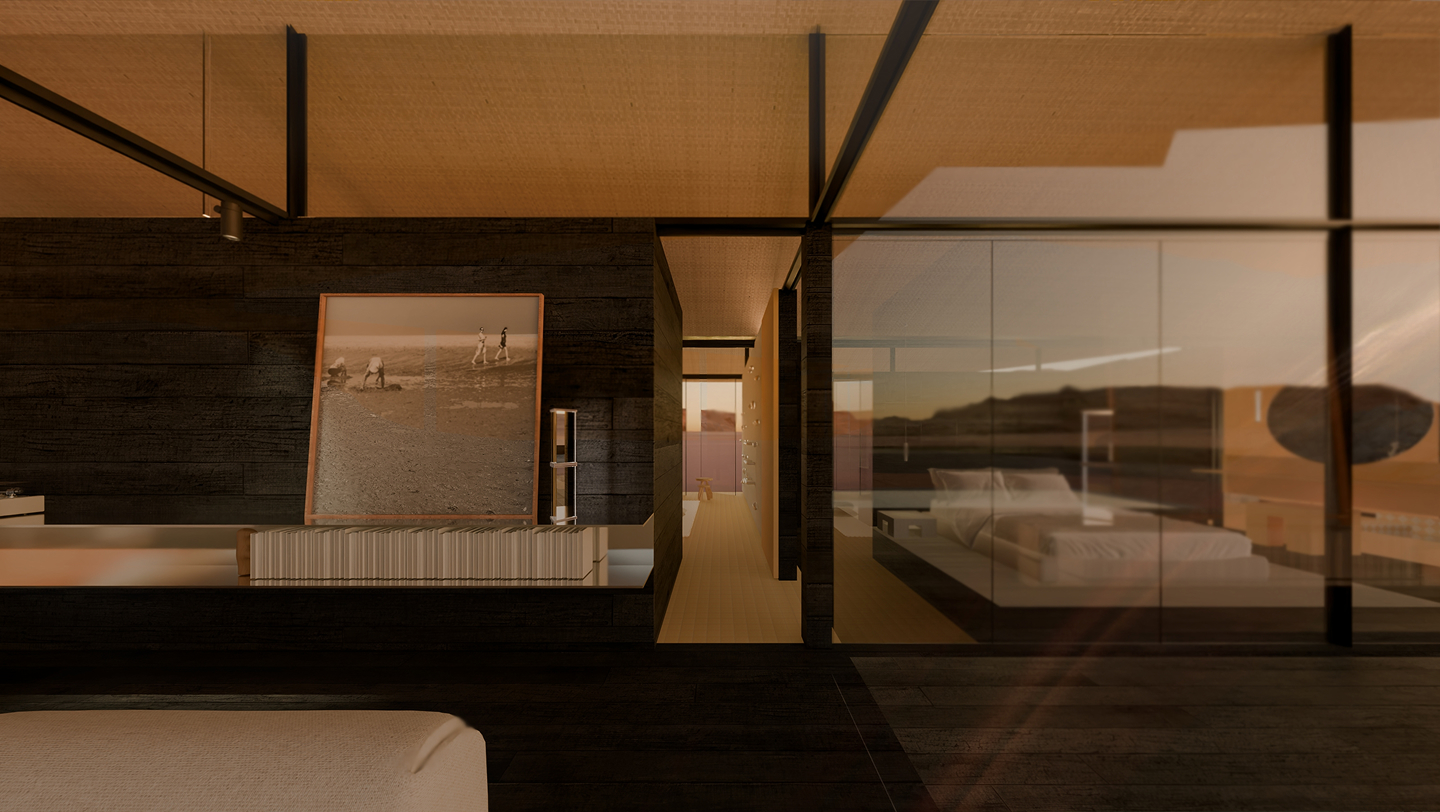
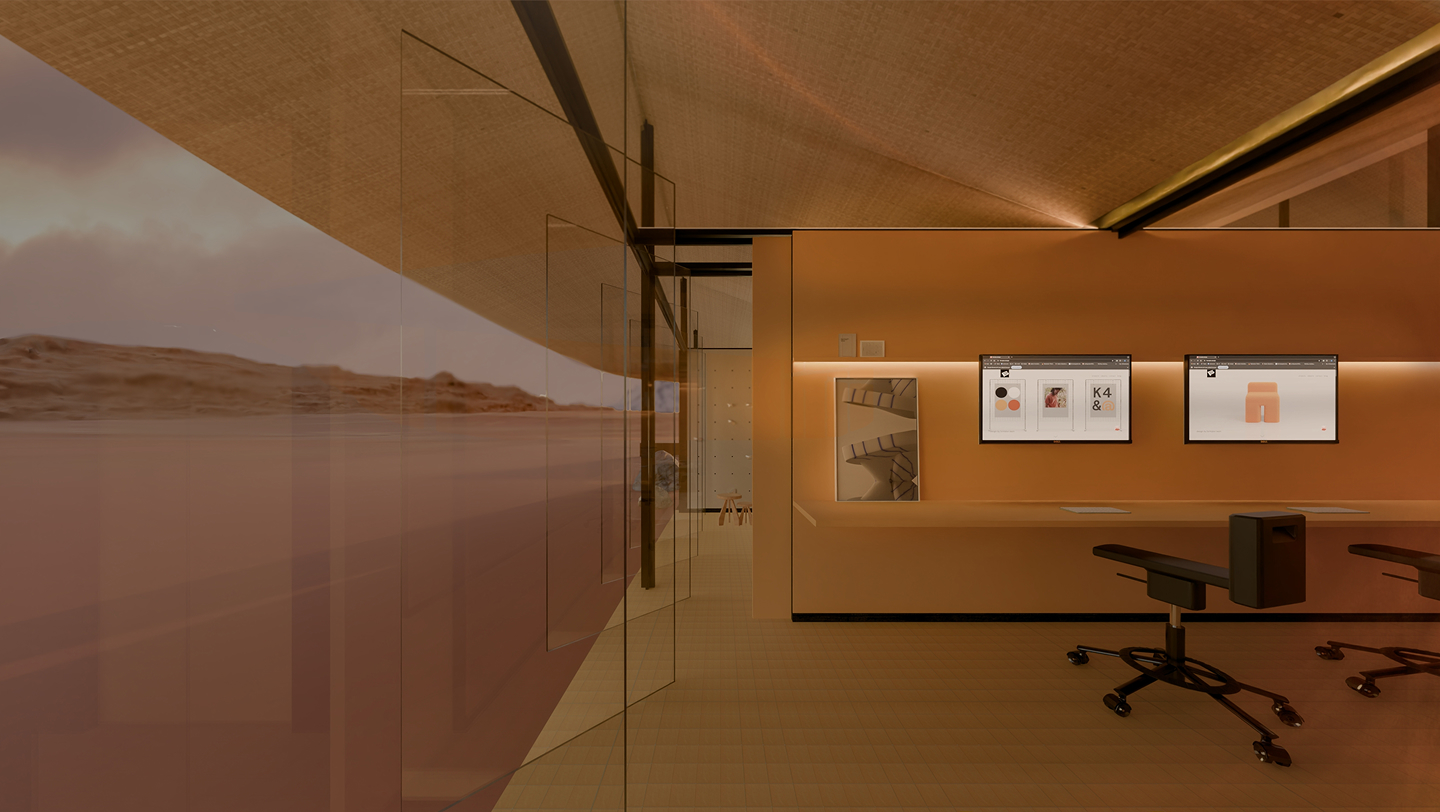
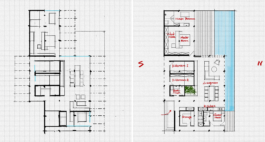
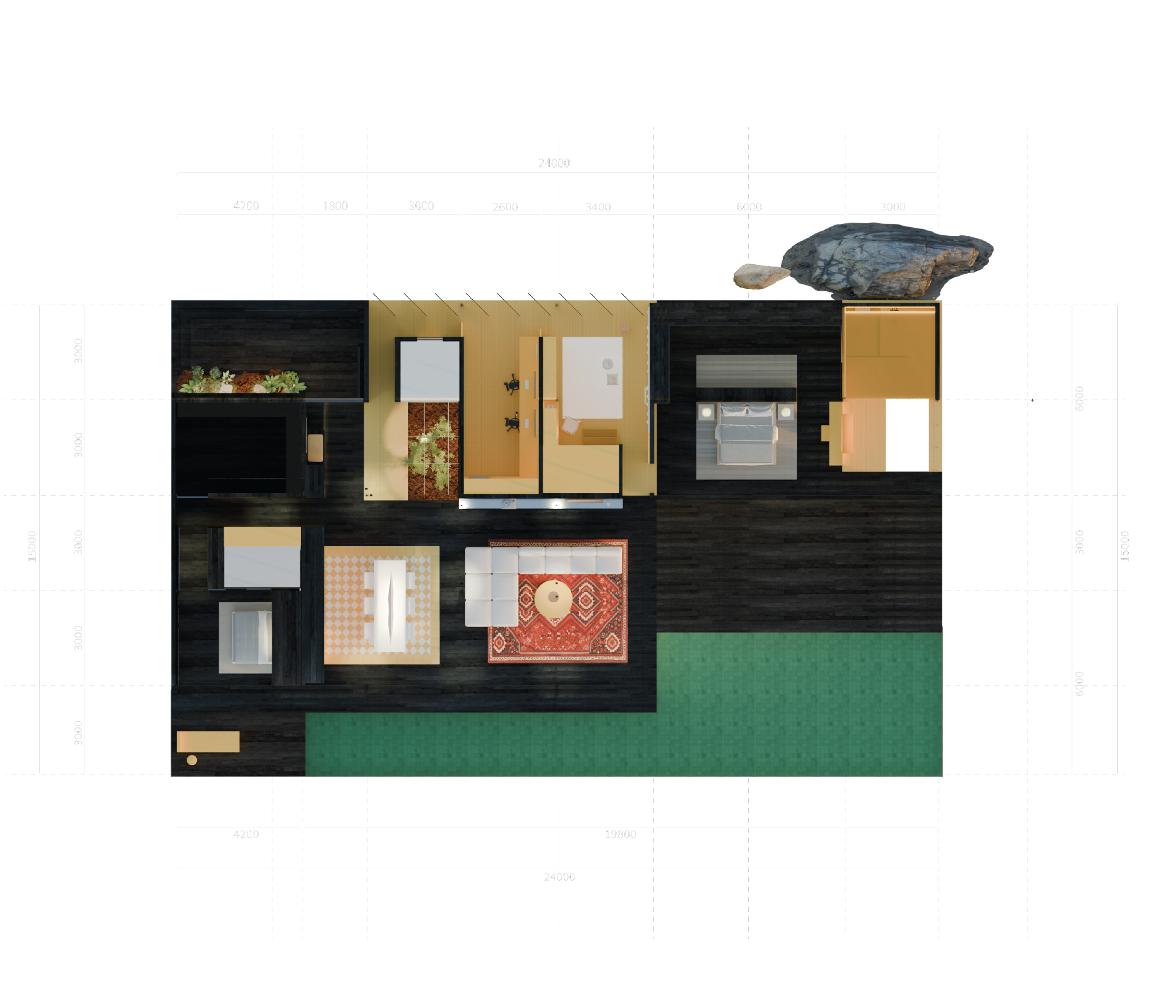
the interior is a study in the luxury of breathing room. it operates on a singular, open-plan fluidly connecting the living, dining, and kitchen areas with the terrace into one expansive social landscape. yet, the brilliance of the layout lies in its stealthy privacy.
the master suite is subtly offset along a visual axis, detaching itself from the communal pulse, while behind the living area, a cluster of three versatile rooms offers a sanctuary for work or family. these spaces are designed for a high-stakes flexibility—they can be circled, partitioned, or opened up, allowing the home to recalibrate itself as needs shift. tucked behind the kitchen, utility areas and a guest wing connect directly to the pool, ensuring that even the functional zones maintain a dialogue with the water.
the palette and material
there is a deliberate, cinematic darkness to the interior. rather than the typical white-box glare of modernism, the palette leans into the mysterious: black-tinted concrete and dark timber floors that absorb the equatorial sun rather than reflecting it.
this deep tonality is punctuated by the soft, ceramic warmth of pastel yellow, creating a sanctuary where the eyes can finally rest. overhead, the ceiling reveals its structural honesty—exposed black steel and aluminum beams that connect the organic roof to the living body, illuminated by integrated light tracks that trace the home's skeletal grace.
the building is structured on a 3m × 3m column grid, with the spatial organization derived from this underlying system. public areas are conceived as open and continuous to foster family interaction, while private living spaces are more enclosed, ensuring both privacy and acoustic comfort. the children’s bedroom and study are designed for flexibility, allowing them to operate as semi-open extensions of the shared space or as fully independent rooms, depending on use.
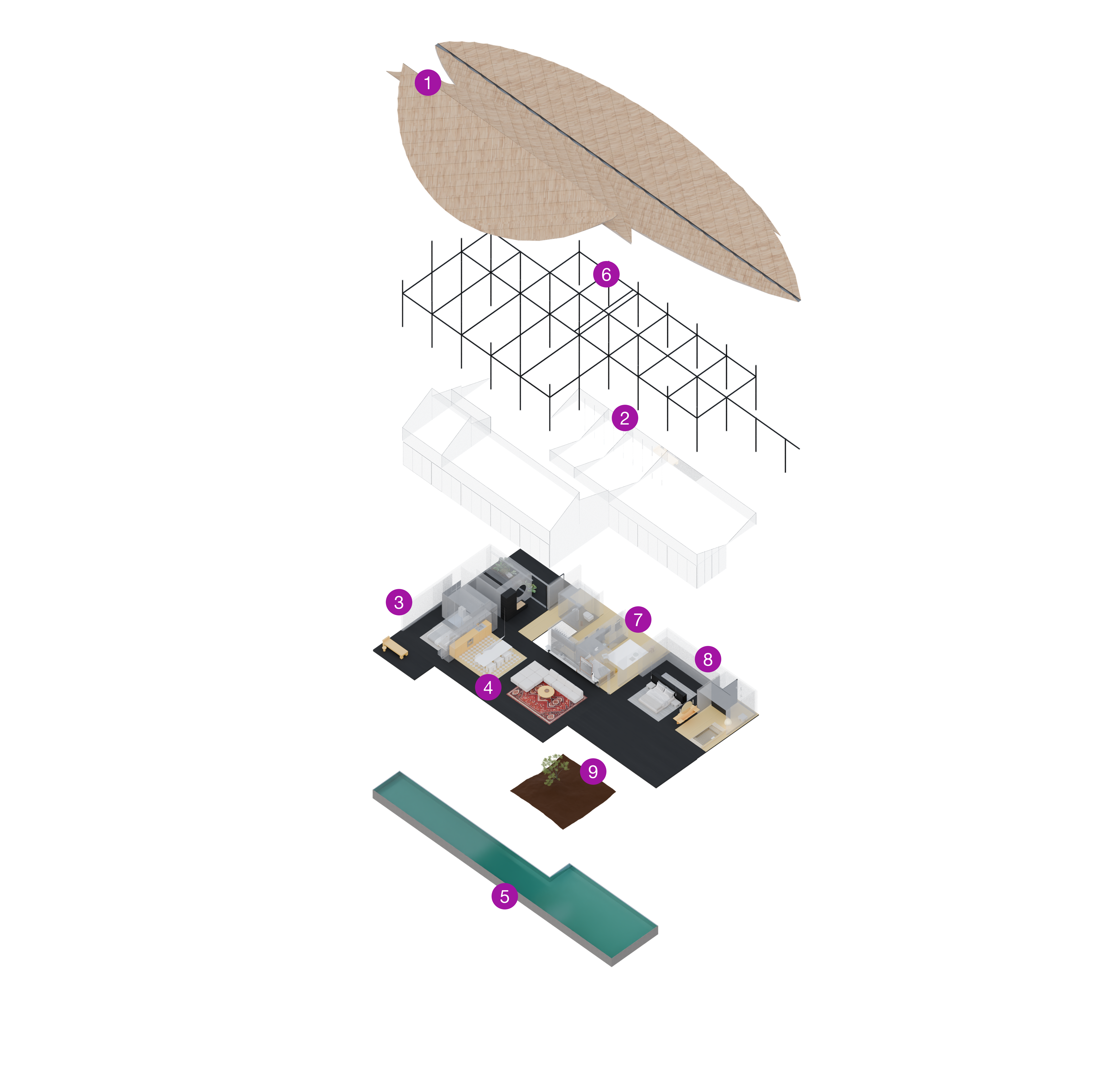
1 // the blade roof
the roof is composed of two overlapping leaf-like planes—one stepping downward and one rising upward—forming a layered, sculptural canopy.
2 // translucent enclosure
a light enclosure defines the interior while maintaining a continuous visual connection to the pool courtyard and surrounding landscape.
3 // guest room
separated from the main circulation of the family areas, the guest rooms provide a quiet and independent retreat for visitors.
4 // living & gathering
an open central living area integrates kitchen, dining, and lounge spaces, creating a relaxed and fluid atmosphere. subtle shifts in materials and textures define spatial boundaries.
5 // the l-shaped pool
a linear water element contributes to indoor air regulation, providing passive cooling and humidity.
6 // the orthogonal grid
an exposed black structural system supports and highlights the roof form with a sense of lightness and clarity.
7 // study & children’s room
when sliding doors are open, a looped circulation creates a continuous play path for children; when closed, it forms a quiet and private space for focused use.
8 // master bedroom
located at the end of the circulation, ensuring privacy and a sense of calm
9 // earth connection
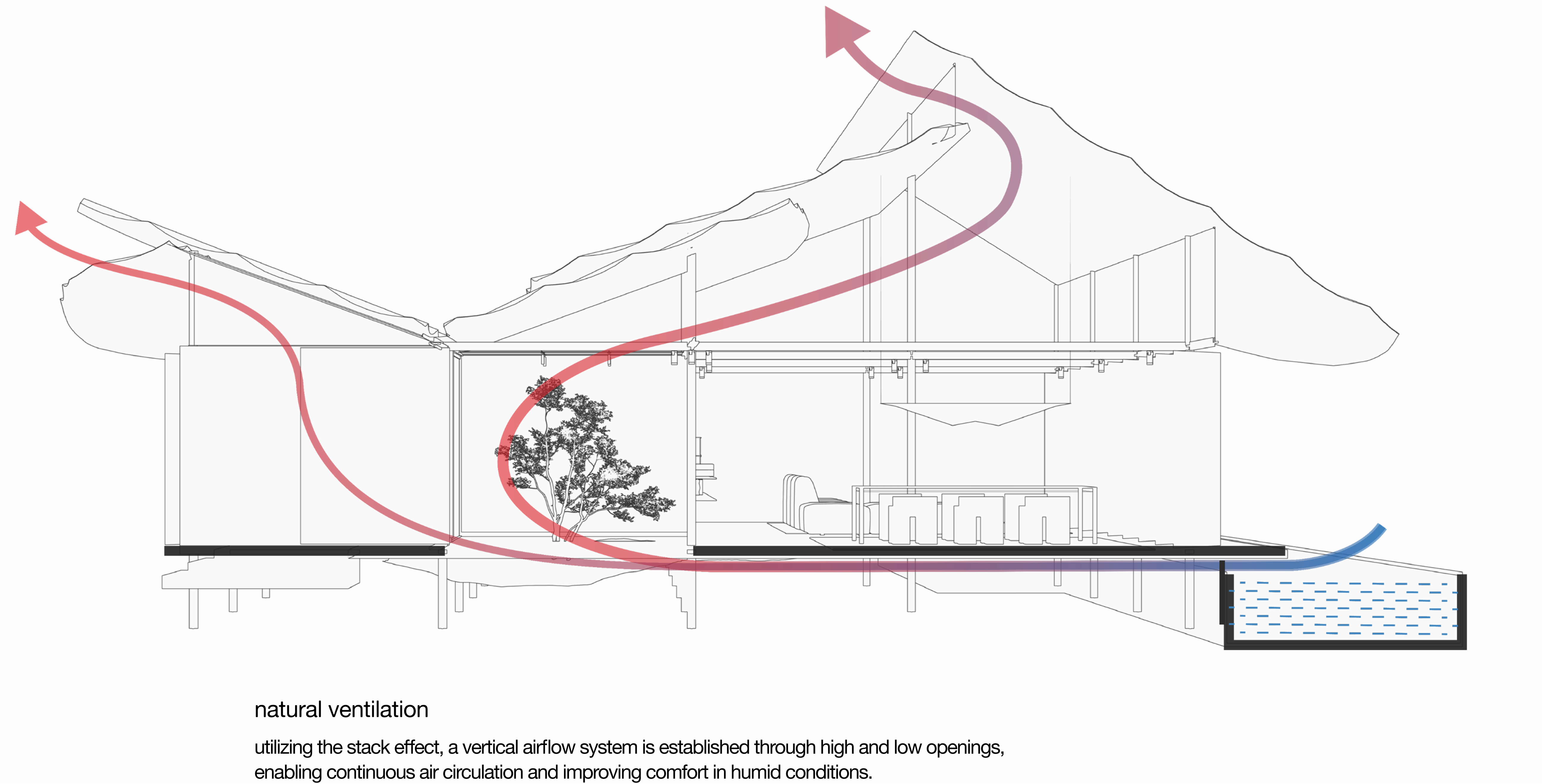
a central zone of dark earth and native landscape anchors the building to its site. natural airflow is drawn in from the ground and released through the skylight, creating a continuous ventilation cycle.
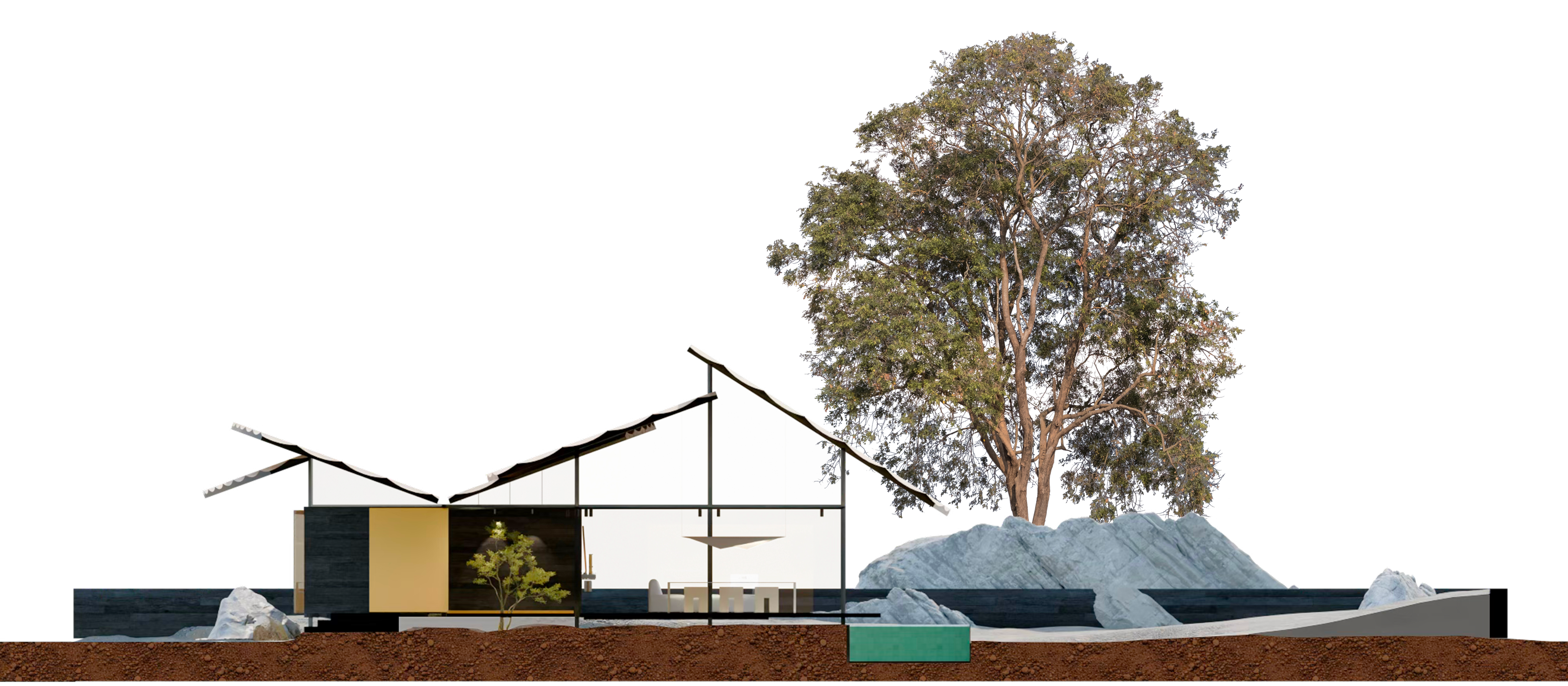
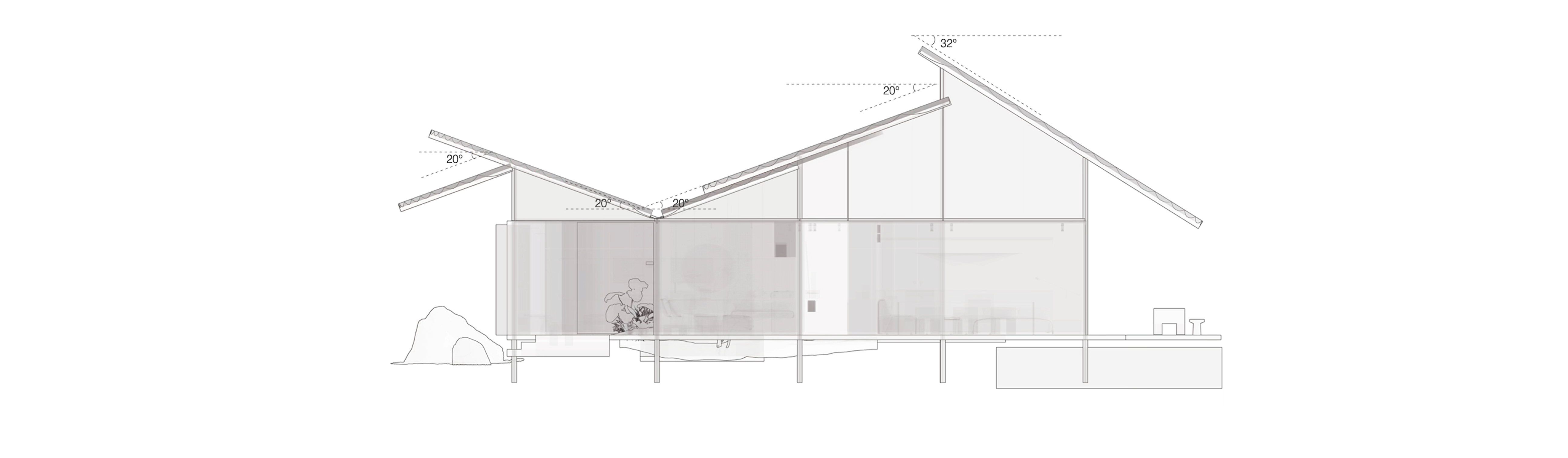
the section expresses a transition between inside and outside. the building is slightly elevated, bringing water, trees, and skylights into the spatial composition, so that the boundary between interior and exterior is no longer clearly defined.
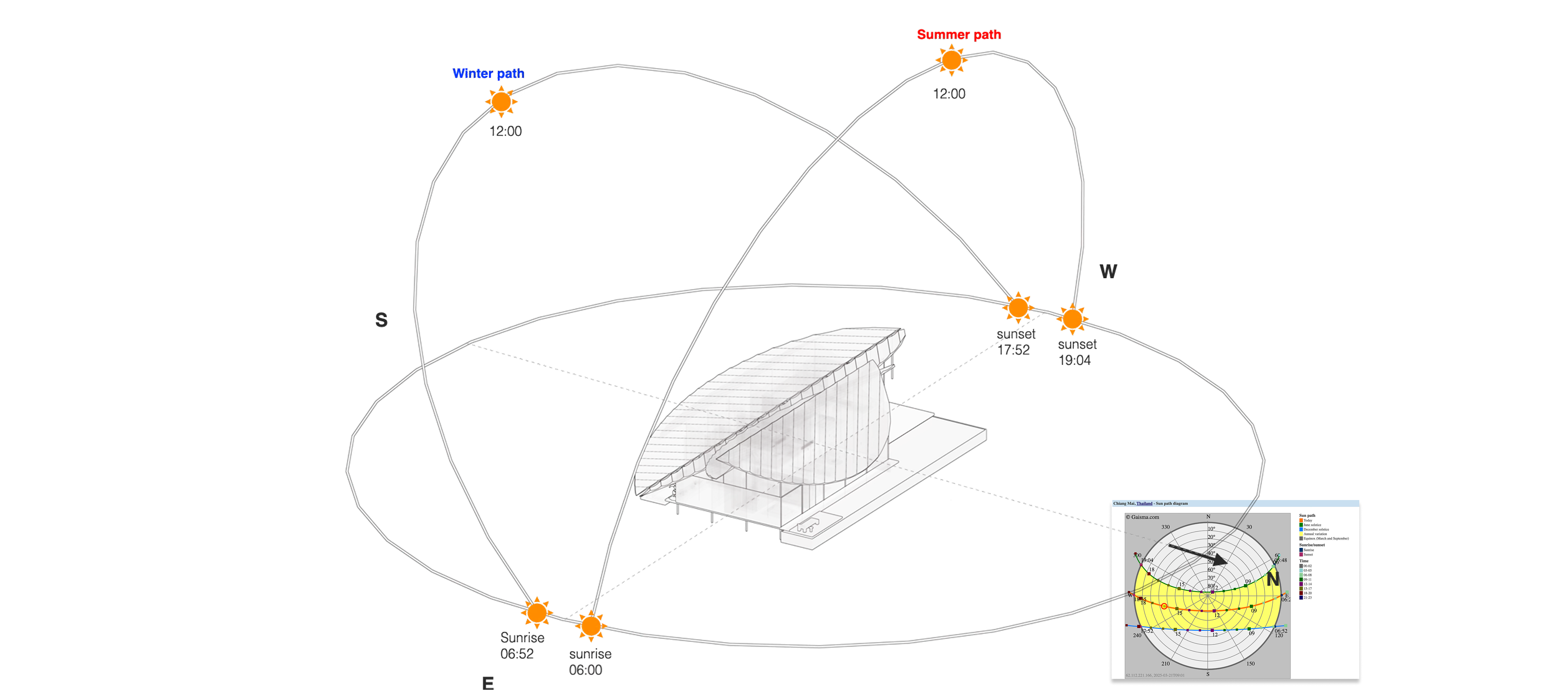
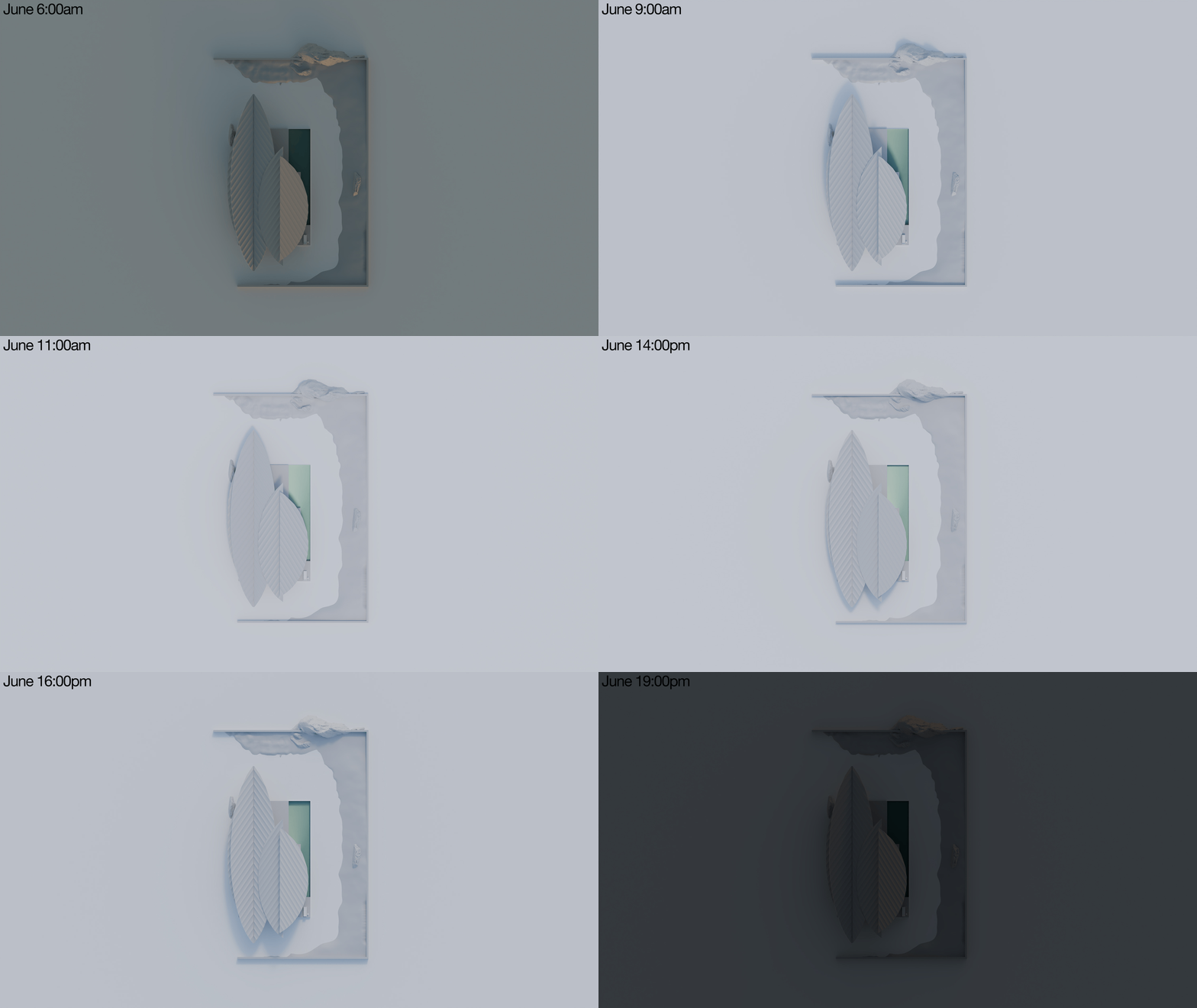
responding to the intense solar radiation of low-latitude climates, openings are carefully oriented-minimizing southern exposure while welcoming soft northern sunset light into shared spaces.

adaptive living space
designing a resilient sanctuary for a heating world that feels less like a machine and more like a second skin.
making the oppressive equatorial sun an ally rather than an enemy through the delicate physics of airflow.
a house that breathes through a leaf-inspired canopy, turning the heavy tropical air into a cooling, constant breeze.
designing a resilient sanctuary for a heating world that feels less like a machine and more like a second skin.
making the oppressive equatorial sun an ally rather than an enemy through the delicate physics of airflow.
a house that breathes through a leaf-inspired canopy, turning the heavy tropical air into a cooling, constant breeze.
biomimetic shelter
this house is not a static object, but an adaptive membrane that combines technological precision with the haptic honesty of natural principles—a sanctuary that not only makes life in heat zones possible but aesthetically elevates it.
the appearance // from the outside, the structure suggests a quiet rebellion against the heavy geometry of the tropics. it is a silhouette of levitation, where a series of elongated, leaf-like blades hover with a delicate, almost accidental grace above the living quarters. these forms—concave and opposite—do not merely shelter; they perform. they are architectural lungs, catching the torrential rain in their hollows or parrying the sun’s glare with a dancer’s poise.
inspired by the primary and secondary vein logic of the leaf, the roof structure is translated into a central spine with branching supports, forming a lightweight and efficient load-bearing system.
central drainage line the pronounced midrib acts as a natural drainage spine, guiding rainwater efficiently from the tip toward the stem and preventing water accumulation across the surface.
directed venation channels the angled lateral veins subtly channel moisture toward the central spine, distributing and directing water flow while maintaining the structural stability of the leaf.
aerodynamic curvature the gentle curvature of the leaf creates a sloped, aerodynamic surface that encourages water to shed quickly, reducing weight and protecting the leaf from environmental stress.
the feeling // there is a profound lightness in the way these elements rest. they are not bolted or bound in the traditional sense, but appear to be gently placed upon the primary supports, like fallen foliage caught in a momentary breeze. it feels less like a building and more like a temporary alignment of light and shadow, a sanctuary that refuses to impose itself on the landscape, choosing instead to float within it.
the interior is a study in the luxury of breathing room. it operates on a singular, open-plan fluidly connecting the living, dining, and kitchen areas with the terrace into one expansive social landscape. yet, the brilliance of the layout lies in its stealthy privacy.
the master suite is subtly offset along a visual axis, detaching itself from the communal pulse, while behind the living area, a cluster of three versatile rooms offers a sanctuary for work or family. these spaces are designed for a high-stakes flexibility—they can be circled, partitioned, or opened up, allowing the home to recalibrate itself as needs shift. tucked behind the kitchen, utility areas and a guest wing connect directly to the pool, ensuring that even the functional zones maintain a dialogue with the water.
the palette and material
there is a deliberate, cinematic darkness to the interior. rather than the typical white-box glare of modernism, the palette leans into the mysterious: black-tinted concrete and dark timber floors that absorb the equatorial sun rather than reflecting it.
this deep tonality is punctuated by the soft, ceramic warmth of pastel yellow, creating a sanctuary where the eyes can finally rest. overhead, the ceiling reveals its structural honesty—exposed black steel and aluminum beams that connect the organic roof to the living body, illuminated by integrated light tracks that trace the home's skeletal grace.
the building is structured on a 3m × 3m column grid, with the spatial organization derived from this underlying system. public areas are conceived as open and continuous to foster family interaction, while private living spaces are more enclosed, ensuring both privacy and acoustic comfort. the children’s bedroom and study are designed for flexibility, allowing them to operate as semi-open extensions of the shared space or as fully independent rooms, depending on use.
1 // the blade roof
the roof is composed of two overlapping leaf-like planes—one stepping downward and one rising upward—forming a layered, sculptural canopy.
2 // translucent enclosure
a light enclosure defines the interior while maintaining a continuous visual connection to the pool courtyard and surrounding landscape.
3 // guest room
separated from the main circulation of the family areas, the guest rooms provide a quiet and independent retreat for visitors.
4 // living & gathering
an open central living area integrates kitchen, dining, and lounge spaces, creating a relaxed and fluid atmosphere. subtle shifts in materials and textures define spatial boundaries.
5 // the l-shaped pool
a linear water element contributes to indoor air regulation, providing passive cooling and humidity.
6 // the orthogonal grid
an exposed black structural system supports and highlights the roof form with a sense of lightness and clarity.
7 // study & children’s room
when sliding doors are open, a looped circulation creates a continuous play path for children; when closed, it forms a quiet and private space for focused use.
8 // master bedroom
located at the end of the circulation, ensuring privacy and a sense of calm
9 // earth connection
a central zone of dark earth and native landscape anchors the building to its site. natural airflow is drawn in from the ground and released through the skylight, creating a continuous ventilation cycle.
the section expresses a transition between inside and outside. the building is slightly elevated, bringing water, trees, and skylights into the spatial composition, so that the boundary between interior and exterior is no longer clearly defined.
responding to the intense solar radiation of low-latitude climates, openings are carefully oriented-minimizing southern exposure while welcoming soft northern sunset light into shared spaces.